 Economic Impact --- Kansas
Google Colab is super convenient because there’s a Gemini coding assistant that helps us quickly troubleshoot any time we have a bug in the code.
Brian Spiesman
Entomologist and BeeMachine Developer
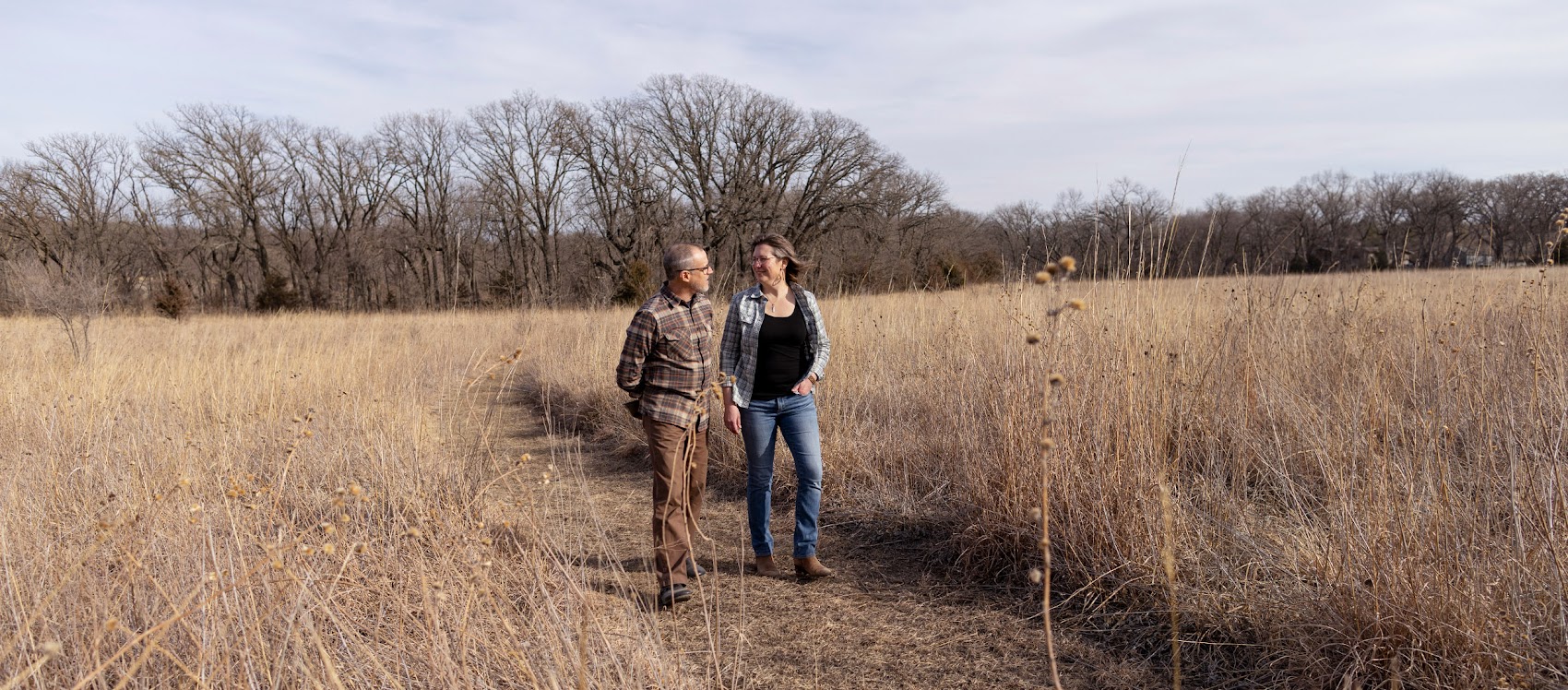
Brian Spiesman knows bees. An entomologist at Kansas State University, he leads the Pollinator Ecology Lab, which studies many of the 20,000+ species responsible for pollinating 90 percent of the world’s flowering plants and a third of food crops. While most people know bumblebees and honeybees, Brian says that “thousands of bee species remain overlooked, largely because they’re tricky to identify.” To help, Brian developed the BeeMachine. It’s a bee-tracking and identification platform, with a website launched in 2020 and an app in 2023. The app engages citizen scientists with an easy way to record sightings: You simply upload photos and AI identifies the insect. Users can track their entry on a map and interact with other bee enthusiasts, while contributing to wild bee conservation.
The BeeMachine was conceived when Brian’s lab had a months-long backlog of specimens to analyze. He used Google’s TensorFlow to speed up the process, adapting models to recognize lesser-known bees. “It just grew from there,” Brian recalls. The BeeMachine can now recognize 350+ kinds of flower-visiting insects with close to 94-percent accuracy. The team uses Google Colab for model training, so they can write and execute Python code in a browser. “It’s super convenient because there’s a Gemini coding assistant that helps us quickly troubleshoot any time we have a bug in the code,” Brian says. “We’re also exploring adding an AI assistant for the app, powered by Gemini and BERT, a natural language machine learning platform, for users’ bee-related queries.” More than 8,900 users have logged over 32,000 sightings of 295 species, and the app has 1,000+ downloads on the Google Play Store. “Ultimately, it’s about getting people excited about bees, and collecting data that scientists can use for monitoring,” Brian says. “With help from AI, we can reimagine what conservation looks like.”